 WeChat
 WhatsApp
 WeChatWhatsApp
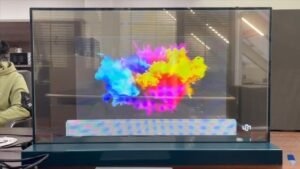
Transparent OLED technology blends digital content with the physical environment. When powered off the panel looks like glass. When active the image appears to float in space without blocking the background. Understanding how a transparent OLED screen works helps project teams evaluate its structure, installation needs, and practical performance.
OLED is a self emissive display. Each pixel emits its own light. This design removes the backlight found in LCD systems and creates a thin structure that allows natural light to pass through.
Every pixel contains organic materials that generate light when an electrical current flows. Since there is no backlight the panel can remain open to light transmission. This makes transparency possible while maintaining strong color and contrast.
To stay see through every key layer must transmit light. These layers include the substrate, anode, organic layers, and cathode. When pixels are off the viewer sees through the panel. When pixels turn on the emitted colors appear over the real environment. This balance creates the floating effect common in retail windows, exhibitions, and architectural displays.
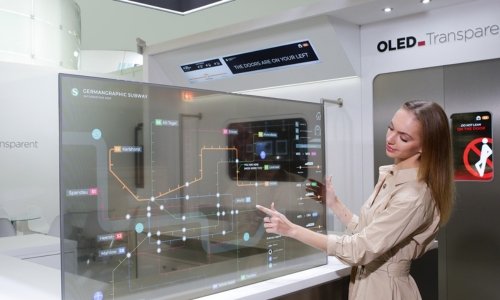
A transparent OLED panel uses several thin layers stacked together. Each layer must support charge movement, color emission, and optical clarity.
Transparent substrate
Glass or flexible plastic provides mechanical support while allowing light transmission.
Transparent anode
Often made with indium tin oxide to move electrical charges.
Organic layers
The hole transport layer, emission layer, and electron transport layer work together to create light.
Transparent cathode
A thin semi transparent metal or advanced conductive material completes the electrical circuit.
Every component must remain thin and highly uniform. Any change in optical density affects transparency and brightness.
Each pixel contains red, green, and blue subpixels. Some designs add a white subpixel to improve brightness. Transparent areas exist between subpixels and allow viewers to see through the panel. Wider spacing increases transparency but reduces resolution. Higher resolution improves image detail but lowers light transmission. Finding the right balance is essential when planning installations in retail, museums, or interior spaces.
Both technologies use self emissive organic materials but they serve different needs.
Best for mid size and large displays
Built on glass or flexible substrates
Uses AMOLED backplanes
Optimized for windows, signage, retail design, and architectural surfaces
Built on a silicon CMOS backplane
Provides extremely high pixel density often above four thousand pixels per inch
Designed for near eye systems such as AR glasses and camera viewfinders
Supports fine details at very close viewing distances
Both systems achieve transparency through precise layer engineering but their use cases differ based on pixel density and viewing distance.
Transparent OLED helps designers present visual information without blocking physical objects or natural light. This makes it suitable for a range of commercial and professional environments.
Stores use transparent panels to show product data, animations, or pricing while keeping the real product visible behind the screen. This creates depth without enclosing the display area.
Transparent OLED supports smart windows and glass partitions. The structure maintains natural lighting while adding programmable content for interior signage or ambience.
HUD systems project navigation and speed data onto glass surfaces. Drivers receive information without shifting focus away from the road.
Curators can overlay text, diagrams, or animations onto artifacts. This supports education without adding physical labels or barriers.
Transparent displays help clinicians view patient data while maintaining visual contact with the operating area. The open design supports awareness and workflow efficiency.
Emerging transparent televisions, smart glasses, and AR devices rely on both transparent OLED and transparent micro OLED. These designs aim to blend digital layers with real world environments.
Transparent OLED continues to improve through new materials and circuit structures.
High transparency that preserves indoor lighting
Strong contrast due to pixel level emission
Low power use because inactive pixels consume little energy
Thin structure that supports modern design
Fast response suitable for motion content
Higher production cost than conventional OLED
Sensitive organic layers that require strong encapsulation
Brightness and transparency tradeoffs that shape image performance
Risk of image retention with static content
Ongoing development for large area mass production
These challenges guide current material innovation and manufacturing research.
Transparent OLED uses transparent electrodes and materials that allow light to pass through both sides of the panel. A conventional OLED has only one transparent layer and blocks light from the back.
Most commercial panels offer twenty to forty five percent transparency depending on pixel spacing and layer design.
Yes. A transparent capacitive layer can be added without reducing clarity.
Transparent micro OLED works better for near eye use because it provides extremely high pixel density. Transparent OLED suits mid size and large glass based displays.
Organic materials slowly degrade over time but improved encapsulation and drive algorithms continue to extend usable service life.
Yes. With no backlight the panel uses power only when pixels emit light. Dark content uses very little energy.
The process requires transparent conductive electrodes, precise organic deposition, and advanced encapsulation. These steps increase complexity and production cost.
Transparent OLED plays an expanding role in retail design, architectural surfaces, automotive HUD systems, and next generation AR devices. RUSINDISPLAY supports these applications with stable OLED and Transparent Display systems built for long term performance. Our engineering approach focuses on optical clarity, practical installation, and responsive support. This helps businesses create visual layers that feel modern, balanced, and naturally integrated into their environments.